A friend just passed on this news to me and I couldn't wait to share it with you! The British Library has announced a plan to digitalize their entire collection of medieval manuscripts (25,000 books dating before 1600) and make them accessible over the internet. Once the project is finished, “Anybody can enjoy them whether they are the leading academic on some aspect of that manuscript … or a schoolchild doing a project,” according to Claire Breay, head of medieval and earlier manuscripts at the library.
Financial Times magazine has been allowed to publish six of these manuscripts on their website, so you can go and view them right now! Here is the link to the FT article, which is also full of fascinating details about various manuscripts in the collection. (Like the one from a Book of Hours in 1540 with illustrations reflecting the first renderings of the game of golf.)
http://www.ft.com/cms/s/2/9b655e8e-70bd-11e2-85d0-00144feab49a.html#slide0
I am so excited! What a treasure trove this will be to researchers, including historical authors like me! (I am pretty sure one of Siri's descendants--my heroine in Illuminations of the Heart--is going to grow up to be an illuminator, too. :-) )
Showing posts with label illuminated manuscripts. Show all posts
Showing posts with label illuminated manuscripts. Show all posts
Thursday, February 14, 2013


Monday, September 3, 2012
Illuminated manuscripts and medieval bookmarks!
As many of you know, my sweet medieval romance, Illuminations of the Heart, explores the world of medieval illumination. So imagine my excitement when I stumbled across this little interview on C-Span's Book TV! Eric Duncan, associate curator for rare books at the Ohio State University Library, shares with viewers a beautiful illuminated Bible (you'll see why these books were called "illuminated" when you see all that gold leaf!) and an original medieval bookmark that helped the reader keep track of more than just what page they were on. Watch and enjoy! It's only about 13 minutes long.
Saturday, September 12, 2009
Marguerite Makes a Book

Did I say I was through discussing research books on illuminated manuscripts? Then I lied…but only because I forgot about this JEWEL of a book that my sister gave me several Christmases ago!
The books I cited previously that I used in drawing together information for my medieval novel, Illuminations of the Heart, told me much about the art of medieval illumination. But this beautiful little children’s picture book shows, as well as tells. That’s the wonderful thing about using children’s picture books, as we’ve discussed before. They’re all about showing, as well as telling, which for the visually minded writer, can be a priceless gift.
Marguerite Makes a Book is just such a gift. Written by Bruce Robertson, with illustrations by Kathryn Hewitt, this book was published by the J. Paul Getty Museum to give museum goers, children and adults alike, a greater appreciation of some of the treasures contained in that museum.
Marguerite Makes a Book is a story of a young girl, the daughter of a medieval illuminator named Jacques, who is commissioned to create an illuminated prayer book for a beautiful noblewoman. But Papa Jacques is growing old, his hands now shake, his eyes are growing dim, and furthermore, he is injured in an unexpected accident. His family needs the money this book will bring, but how will the prayer book ever be finished in time?
Enter his daughter, Marguerite, who has grown up learning much of her father’s craft. Determined to save both the family income and her father’s reputation, Marguerite sets out to gather the materials necessary to finish “illuminating” the prayer book. We follow her, in both word and picture, as she travels into town to buy some necessary parchment; gathers feathers from which to make pens; purchases herbs and minerals to make paints, and even some sheets of gold leaf. Armed with all these ingredients, she returns to her father’s workshop and finishes the paintings her father is unable to complete. And we get to watch her along every step, thanks to Ms Hewitt’s beautiful illustrations! There is even a page pull-out section where Marguerite demonstrates how she makes each of the four paint colors she needs for her task: red, yellow, green, and blue (the latter made from that precious lapis lazuli mentioned in my earlier posts and included as one of my Medieval Words of the Day).
The visuals in Marguerite Makes a Book are absolutely gorgeous. Many of the pages are bordered with designs similar to what one might find in an actual illuminated manuscript, with scrolling flowers, nesting birds, and little touches of shimmering gold paint (or an excellent imitation thereof) that gave the “illumination” to the “illuminated manuscript”.
This book should delight any child. But it should also delight any adult who would like to “see” as well as “read” about how books were illuminated in the Middle Ages.
Thursday, September 10, 2009
Medieval Word of the Day


Bestiary: a collection of drawings or paintings of animals, real or imagined, accompanied by their physical and allegorical descriptions.
Check out today's blog review of Illuminations of the Heart at Taffy's Candy. Leave a comment to win one of four prizes, including an autographed copy of Illuminations! You can read an interview with me there, too.
Friday, September 4, 2009
Medieval Word of the Day
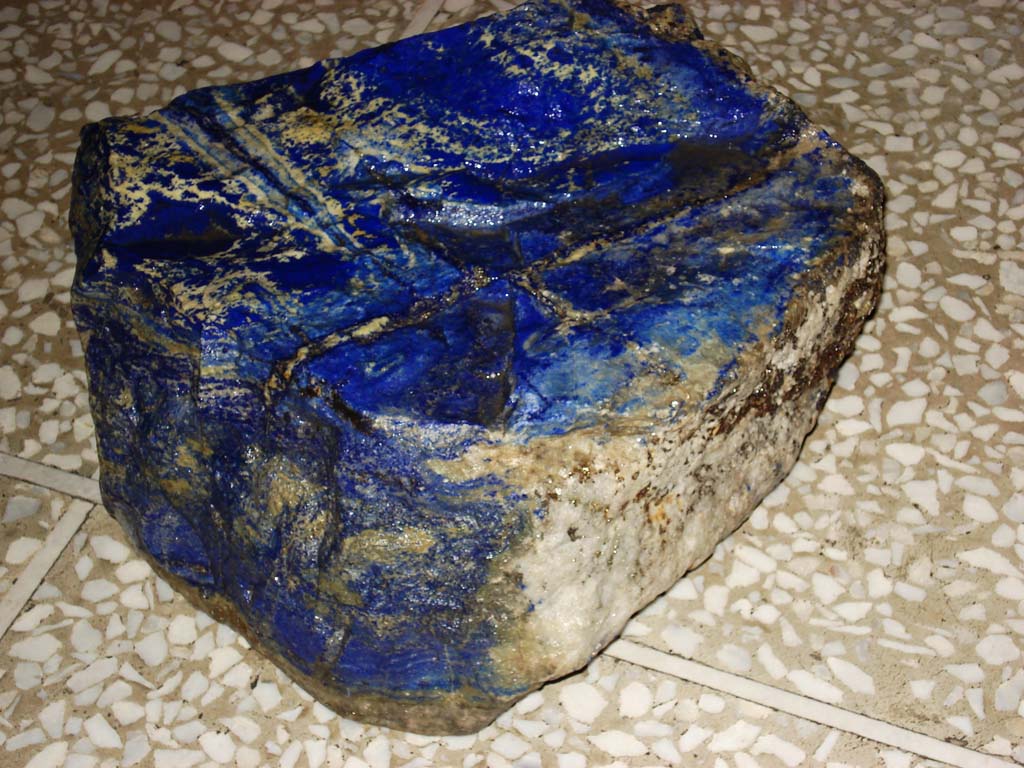
Lapis lazuli: a stone mined in Persia and Afghanistan, from which a blue pigment was extracted and used in painting medieval illuminated manuscripts
Click here to see what lapis lazuli looks like
Saturday, August 22, 2009
Two More Books on Medieval Books
Let me share with you two more resource books I used for the subject of illuminated manuscripts for my medieval romance, Illuminations of the Heart, and then we’ll move on to another subject.


First was a very handy little book called The Materials and Techniques of Medieval Painting, by Daniel V. Thompson. This book covers a tremendous amount of highly useful and fascinating material on the subject of medieval illumination and other kinds of medieval painting.
If you’re not an artist, the chapter headings can be a little confusing. Chapter 1, for instance, is entitled, “Carriers and Grounds”. However, I merely jumped straight to the subheadings in the chapter of particular interest to myself and my story: “The importance of book making”; “Parchment making”; “Vellum”; “Qualities of parchment”; and “Preparations”. These sections (which I heavily highlighted) taught me in detail how parchment was made, the difference between common parchment and vellum (“‘vellum’ means calf skin and nothing else, while parchment is a general term applicable to any kind of animal skin, including vellum”); and how parchment was prepared for the painting of illuminations. These sub-sections are followed by others not pertinent to my story, though they may be pertinent to yours, such as painting on wood, the use of gesso, creating a polyptych (multiple panels set in wood frames), and painting on canvas or plaster.
The second two sections that provide an absolute treasure trove for a researcher of medieval illuminations, are chapters 3 and 4, which cover the wide variety of pigments available to the illuminator and how these pigments were derived, breaking them down into their individual color groups: black, brown, white, red, blue, purple, green, and yellow (Chapter 3), followed by a lengthy section of colors derived from metals, with an emphasis on creating the gold gilding (Chapter 4) that truly gave manuscripts the brilliant, reflective “light” that “illuminated” their pages.
If only for this extensive and detailed section on pigments alone, The Materials and Techniques of Medieval Painting is well worth having in your library of resource books!
Finally we come to The Medieval Book, by Barbara A. Shailor. While similar in format to the research books I cited in an earlier post about illuminated manuscripts (i.e., lacking a useful index, but filled with helpful marginal headings to help you quickly navigate to the particular information essential to the story you are writing, as well as being liberally sprinkled with reproductions and photographs), The Medieval Book differs from those earlier sources by focusing on what it’s title suggests: books in general, rather than illuminated manuscripts in particular.
Not that illuminated manuscripts are neglected in this volume. They are indeed discussed, as any comprehensive resource on medieval books would require. But Shailor spends much more of her time describing how medieval books were made. Subjects covered include: pricking and ruling in preparation for the text to be added; ruling with sylus and crayon (the latter an innovation of 12th Century Europe outside of Itay); pattern books (mentioned in a previous post, and an important plot device in Illuminations of the Heart); the various styles of medieval scripts used by the scribes who created the text of the books; borders and miniatures (again, a nice section on illuminations); followed by how medieval books were actually put together (sewn, board attachments, pasteboards, headbands and edges, decorative stamping of the covers, and much, much more!).
These are by no means the only resource books available for information on medieval illumination, painting or book making. They are simply the titles I used in researching these subjects for Illuminations of the Heart. If you see comments listed on any of my posts, you’ll want to take time to check them out, as readers often share additional titles they’ve found useful on these subjects, thus widening all of our research knowledge on this wonderful and fascinating subject!
Monday, July 13, 2009
More About Illuminated Manuscripts
I promised in my last post that I would finish telling you about my experiences with two of the books I mentioned there but ran out of room to discuss: The Illuminated Manuscript, by Janet Backhouse and Illuminated Manuscripts, by D.M. Gill.
Unlike Harthan’s The Book of Hours, which had separate sections for historical information (in the front matter), followed by pages of manuscript reproductions, both The Illuminated Manuscript and Illuminated Manuscripts intermingle the historical research information with manuscript samples.
The historical research information in The Illuminated Manuscript, by Janet Backhouse, lacks the helpful subject headings of The Book of Hours and Illuminated Manuscripts, with all the information running in one long narrative form between the pictures. One is therefore required to pretty much study the entire text, at least up through whatever century you have chosen to place your story in. It’s all easy, non-intimidating reading, though.

My novel, Illuminations of the Heart is set in the year 1180, so for the purposes of my particular story, I was able to stop highlighting information (which I did with a nifty pink marker) once the narrative reached the 1200s and later. Most of the information was very basic, but again, it proved a starting point in my research, raising subjects in my mind to pursue in greater depth elsewhere. For example, a very brief discussion of inks and paints used in illuminated manuscripts made mention of “the most exotic” of paints made from a mineral called lapis lazuli. This mineral, the text said, was mined in far-off Afghanistan. Little more was said about this paint, but I immediately knew I wanted to incorporate its use into my story, and made a mental note to research this paint further.
Some other facts I learned that played parts in my story:
- Not all scribes and illuminators belonged to religious communities. Although the setting up of craftsmen’s guilds for secular scribes and illuminators began mostly in the 13th Century, evidence that secular illuminators existed can be traced as early as the 12th Century setting of my story. Hence, having my heroine’s father operate a secular illuminating “shop”, though perhaps rare, was not historically implausible.
- The illuminated Psalter became a popular book for private devotions during the middle of the 12th Century. So my heroine is commissioned to illuminate a Psaltery in the course of my story.
- In the 12th Century Kingdom of Jerusalem there existed an artist who signed his work with the Greek name, “Basilius”. This artist created Psalteries for Queen Melisende of Jerusalem, so he must have been an artist of some stature and fame. Therefore, it made perfect sense that my heroine’s father might have been sent to Jerusalem to study Eastern methods of illumination with this great man.
There were other fascinating bits of information I picked up from The Illuminated Manuscript, but since they did not appear in my novel, I will reserve my discussion of them until they work their way into a future story of mine. :-)
D.M. Gill’s Illuminated Manuscripts similarly interweaves text with picture replicas. However, t his book is broken down into helpful subsections: A Short Chronology; Early Middle Ages, divided between Sixth to Ninth Centuries, Ninth to Eleventh Centuries, and Twelfth Century; Late Middle Ages, which covers the Thirteenth through Sixteenth Centuries; Materials and Manufacture; Other Cultures, focusing on Jewish and Spanish illumination; and a Conclusion bringing us up to the printing press.
I found the section on Materials and Manufacture to have the most practical application for my story. This section discusses (in greater detail than Backhouse’s book) how parchment was made; how pages were “ruled’ in preparation for adding the text; what kinds of pens and inks were used; how paints of various colors were prepared for the illuminated miniatures (including another reference to lapis lazuli); the application of gold or silver leaf; how the final, completed book was assembled; and even how much some “professional illuminators” charged for their work. I was not able to use a fraction of this information in my novel, Illuminations of the Heart, but I certainly now have a treasure trove of interesting facts for future projects!
I have a few more titles related to illuminated manuscripts to share with you in my next blog. Until then, you might check out the comment left by writemedieval on my last post to check out two books on illumination by Christopher de Hamel. I’ve already put both of these books in my Amazon shopping cart!
Thursday, June 25, 2009
Shedding Some Illumination on Medieval Illumination
 Okay, so I admit it. It’s been, like, forever since I’ve blogged here. My apologies. I kind of got lost in “life” for awhile. There’s good news, though. Remember that detour I told you about, putting my next medieval novel, Illuminations of the Heart, on hold while Leatherwood Press re-published Loyalty’s Web? Well, not only has Leatherwood decided to publish Illuminations of the Heart as well (under a new imprint of theirs called Walnut Springs Press), things have proceeded along so swimmingly that the book has been typeset, the cover art has been finalized (see right), and ARCs are being sent to reviewers, even as I type this! You can read the back cover blurb on my companion blog, JDP NEWS, and the first chapter there as well, if you like. If you do so, you’ll discover that the heroine of my new medieval romance is a medieval illuminator. So it only seems appropriate that I resume my posts to medieval research with joyce by sharing with you a few sources I used for my novel regarding medieval illumination.
The chief problem I discovered with researching books about medieval illumination was the indexes…or to be more precise, the lack in most instances thereof. Three of the initial source books I used for my research were: Illuminated Manuscripts, by D.M. Gill; The Illuminated Manuscript, by Janet Backhouse; and The Book of Hours, with a historical survey and commentary by John Harthan. Now indexes are my favorite method of “short cutting” research. Instead of reading an entire book on a subject that might contain only a fraction of needed information for one’s project, one can look in a good index and zero in on a subject, such as, let’s say in the case of medieval illumination, “inks”, “paints”, or “writing implements”. However, I discovered that many books about illuminated manuscripts are treated as art books, rather than research books, and whoever the powers-that-be are who are in charge of assembling such books tend to place the emphasis on the undeniably beautiful examples of illuminated manuscripts through the ages, rather than the process by which such manuscripts were made. Hence, the bulk of the three books listed above are made up of page after page after page of examples of beautiful artwork from medieval manuscripts. But an index? Only one of these three books had one, and the exception—in The Book of Hours—was made up almost entirely of the names of artists, names of manuscript collections, and names of historical personages. Hence…no short cut to the research process in the back matter.

Fortunately, however, each of these books had plenty of front matter preceding the replica portions to provide me with lots of information on how the replicas to follow were originally created. And in this front matter, two out of three of these books broke this information down into subject headings which did assist in speeding along my research.
For example, my heroine in Illuminations of the Heart had no intention of creating a Book of Hours, at least for the duration of this part of her story. (What she might have created after I typed “the end” is another matter entirely!) But the front matter of The Book of Hours is broken down into these categories: “Historical Evolution”; “Contents”; “Decoration”; and “Social Aspects”. The historical evolution of the Book of Hours was not pertinent to the story I was telling, so I could simply skip over this part. Under the heading, “Contents”, I did find some useful information regarding the Gradual Psalms, and since my heroine did, in fact, illuminate a psaltery in my book, this portion of the front matter was very helpful. Most of the information under “Social Aspects” did not prove pertinent to the current needs of my book. Hence, I zeroed in on the part about “Decorations”. This, for the purposes of my novel, proved the most helpful portion of The Book of Hours. This section taught me about pattern books (books designed to show a patron examples of the illuminator’s range of artwork); how books were first ruled by the scribe, prior to either calligraphy or miniatures being added; how spaces were deliberately planned out ahead of time and left in the text for illuminated letters or images to be added later; and the method by which such decorations were ultimately added. All of this was discussed in very brief detail, requiring me to seek out further sources that would provide me with greater depth of information, but this section did prove an excellent starting point for suggesting to me what kinds of information I needed to delve into more deeply. And its description of decorative letters inspired a scene in my book where my heroine paints an image of the Biblical shepherd-king, David, inside the loops of a large, illuminated “B” in the word “Blessed” at the beginning of the first verse of the Gradual Psalms. (Granted, I used the English, rather than the Latin, form of this Biblical text, but that was to impart a greater emotional impact of the verse on the reader.)
I was going to share with you information on illuminations gleaned from the other two source books I mentioned above, but I think this post is long enough as it is. So here I will stop, but this time I promise to return, sooner rather than later (certainly sooner than eight months later!), and share with you my experiences with Janet Backhouse’s The Illuminated Manuscript and D.M. Gill’s Illuminated Manuscripts.
**************************************************************
Argh!!! Once again, I discover that one of my treasured research books is apparently out of print. But once again, there appear to be multiple used copies of The Book of Hours by John Harthan available on Amazon, so my guilt at referring you to another out-of-print book is slightly salved. It hasn't been the first time, and unfortunately, it more than likely won't be the last!
Subscribe to:
Posts (Atom)